01
Portable measurement
We are investigating whether wearable brain imaging can make repeated, real-world measurement more useful alongside established lab methods.
Analog Memory Aug 21.3 is an early-stage research lab exploring wearable brain imaging and AI methods for searchable records of visual experience.
Working premise
Curiosity is a method. The long-term idea is ambitious; the near-term work is evidence, prototypes, and transparent limits.
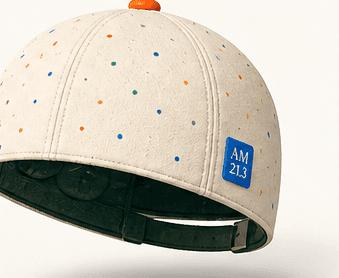
A memory is personal. So should be the model that studies it.
Conventional imaging and controlled experiments remain important baselines. We are asking what becomes possible when neural measurement follows an individual over time and personalized models learn from that context.
This is not a promise of a complete thought or memory backup. It is a research program for determining what can be measured, reconstructed, and compared with care.
Each step narrows the gap between an evocative possibility and a result another team can inspect.
We are investigating whether wearable brain imaging can make repeated, real-world measurement more useful alongside established lab methods.
The models are meant to learn an individual’s neural representations, with signal quality and uncertainty kept visible rather than abstracted away.
The near-term question is bounded: can selected visual experiences be reconstructed or retrieved well enough to evaluate against clear benchmarks?
The path is intentionally incremental. A useful result can be a clear limit as often as it is a successful reconstruction.
Collect and characterize neural signals in defined conditions.
Train a personalized representation without hiding uncertainty.
Evaluate reconstruction or retrieval against explicit baselines and benchmarks.
Every useful claim starts with a reproducible measurement and a defined experimental condition.
Reconstruction quality, signal limits, and comparison baselines belong in the result.
Sensitive neural data requires clear consent, careful governance, and participant agency.
Research collaboration, technical feedback, and future study participation all begin with a careful conversation about the data, the method, and the limits.